

 TECHNICAL DOCUMENTATION
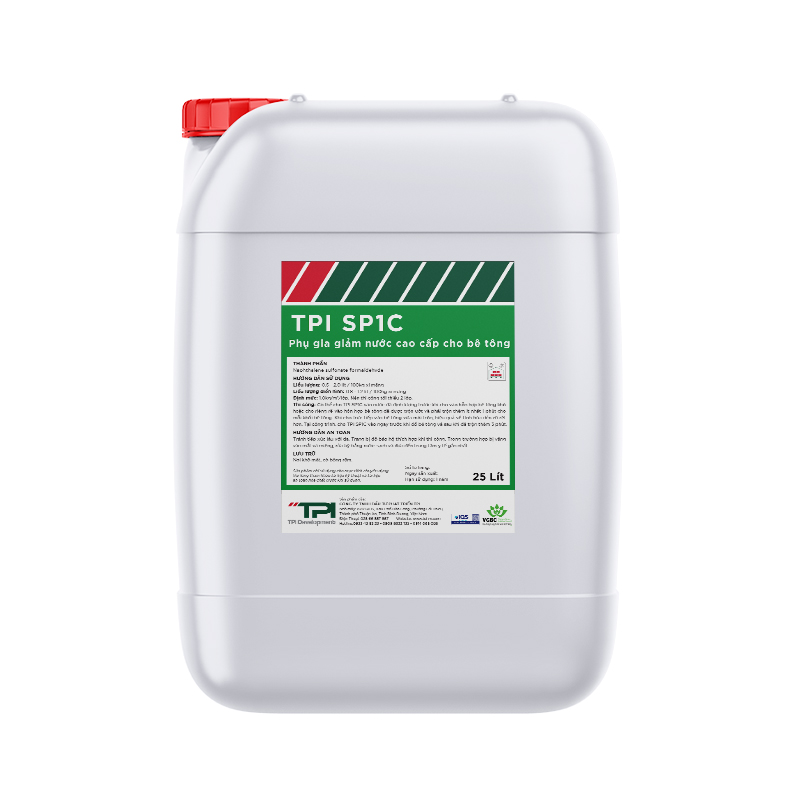
TPI SP1C
High-performance water-reducing admixture for concrete
DESCRIBE
TPI SP1C It is a superplasticizer used in the production of fluid concrete and also acts as a significant water-reducing agent to achieve high initial and final strength. TPI SP1C conforms to standards ASTM C494 Type F.
APPLICATION
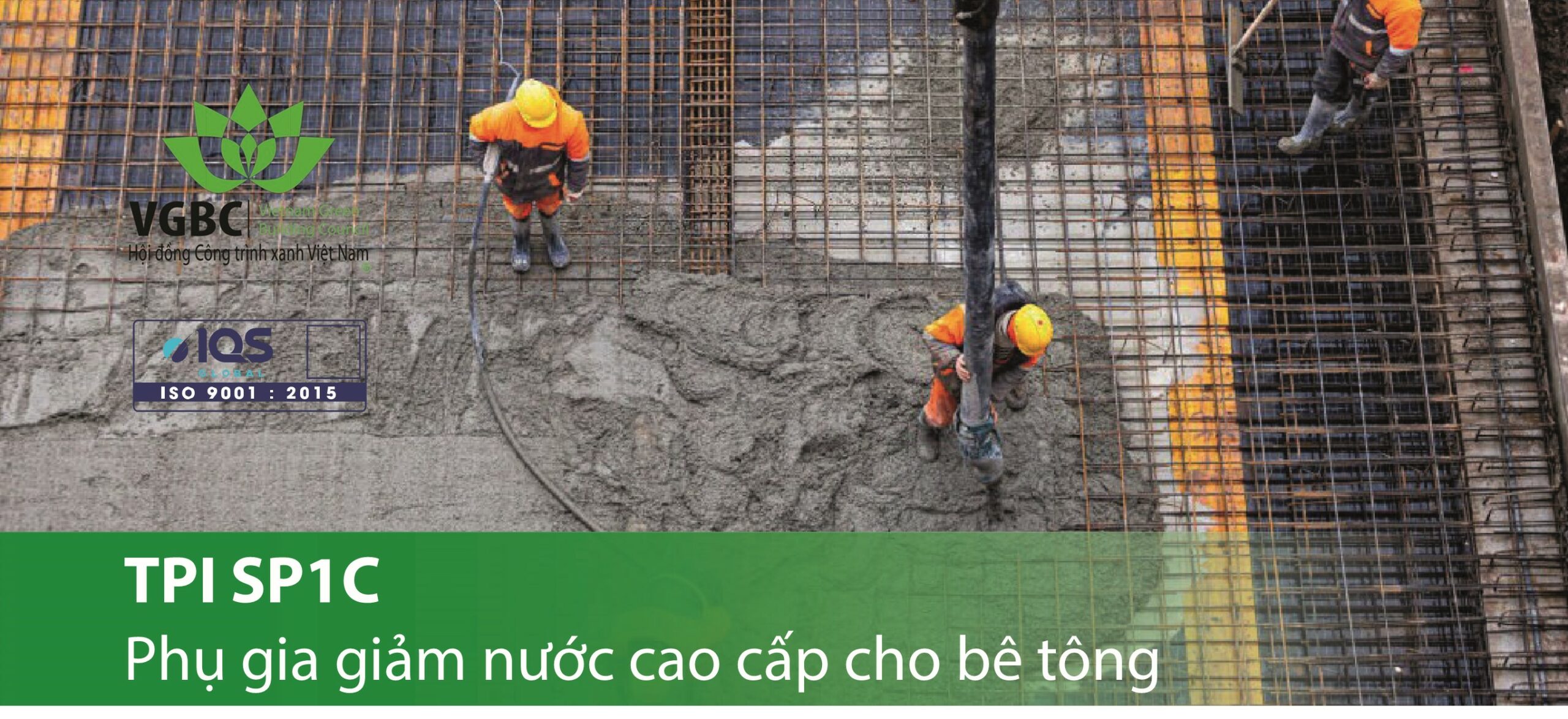
TPI SP1C It is used as a superplasticizer for the production of flowable and water-reducing concrete to achieve high early strength for various applications:
- Floor slabs and foundations.
- Walls, columns, and bridge piers
- Thin structural elements with high reinforcement density.
- Precast and prestressed concrete components.
- Cantilever bridges and structures.
ADVANTAGE TPI SP1C
- The workability has been significantly improved.
- Improve workability when pouring concrete for thin structural elements with densely packed reinforcement.
- Reduce the amount of work required for compaction.
- Normal fertilization is not delayed.
- Significantly reduces the risk of being stratified.
- It helps to significantly optimize the cement content compared to regular concrete.
SPECIFICATIONS
| Target | TPI SP1C |
| Ingredient | Naphthalene sulfonate formaldehyde |
| Shape/Color | Dark brown liquid |
| Density | 1.20 ± 0.05 kg/liter |
| Dosage | 0.6-2.0 liters per 100 kg of cement. Common usage:
0.8-1.2 liters per 100 kg of cement |
| Specifications | 5 / 25 / 200 liter drums |
| Expiry | 24 months (when unopened) |
| Storage | A cool, dry, shady place. |
INSTRUCTIONS FOR USE TPI SP1C
- Mixing sequence: priority should be given to... TPI SP1C Add the pre-measured water before adding it to the dry concrete mix, or add it separately to the wet concrete mix, and mix for at least 1 minute for each batch of concrete.
- When added directly to freshly mixed concrete, the plasticizing effect is more pronounced.
- When adding the product on-site, add it immediately before pouring the concrete and after mixing for an additional 3 minutes.
- Using a significantly excessive amount will increase the fluidity of the cement paste. To avoid separation or segregation, wait until the slump has decreased to the specified level before pouring the concrete.
HEALTH AND SAFETY INFORMATION
Occupational safety and health: Appropriate personal protective equipment, including safety glasses and gloves, should be worn when using this product. It may cause allergic reactions upon contact with eyes, skin, or mucous membranes.
Ecology: Do not dispose of into water sources or soil.
Transport: Not dangerous.
Refer to the product's Material Safety Data Sheet (MSDS) and other relevant safety data sheets.




Reviews
There are no reviews yet.