

 TECHNICAL DOCUMENTATION
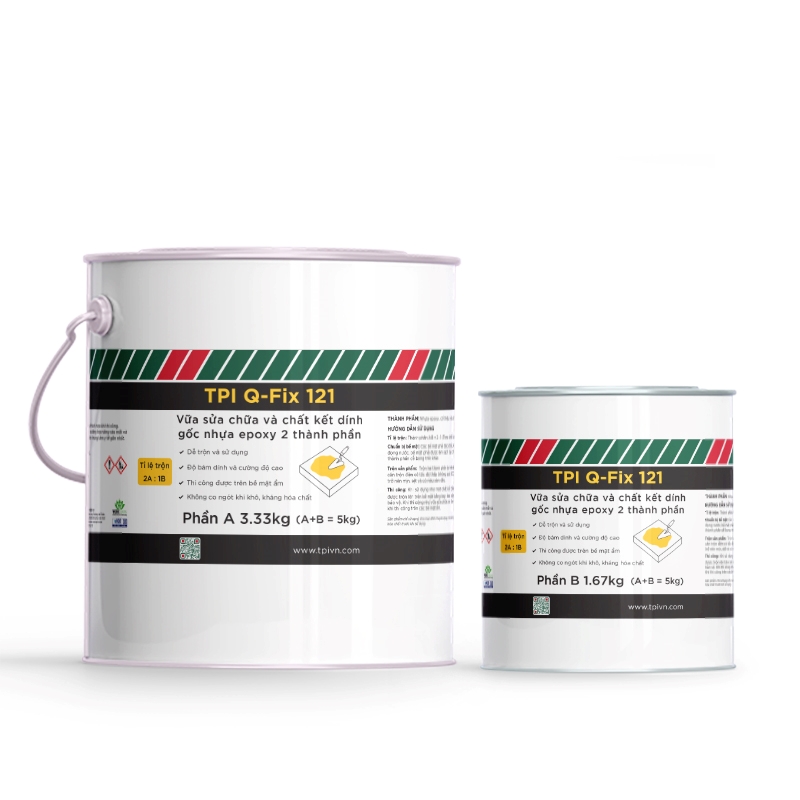
TPI Q-Fix 121
Two-component epoxy resin-based adhesive
DESCRIPTION OF TPI Q-FIX 121
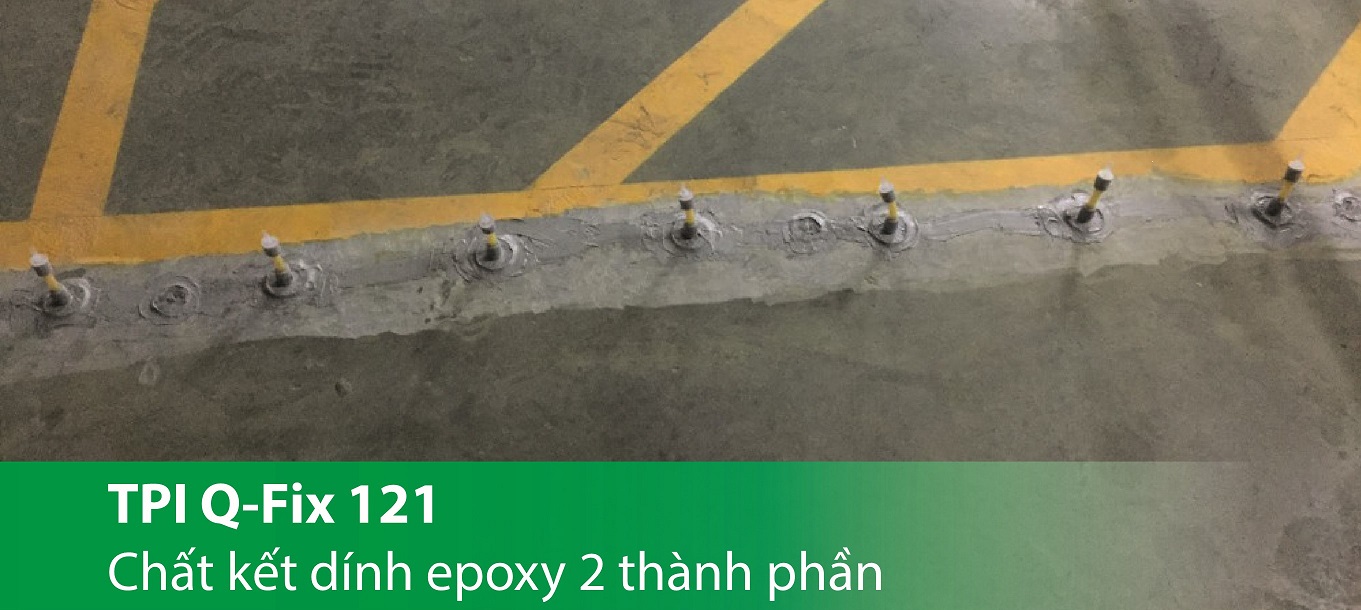
This product is a two-component, moisture-resistant, epoxy resin-based structural adhesive and repair mortar combined with special fillers. Its flexible adhesive properties allow for easy application and versatility.
APPLICATION TPI Q-FIX 121
This product is used as a structural binder and repair mortar for:
- Concrete structural elements.
- Natural stone, ceramic, fiber cement.
- Mortar, bricks, plaster.
- Iron, steel, aluminum…
- Used as a repair and bonding mortar for corners and edges, filling voids and potholes. Suitable for vertical surfaces and ceilings.
- Repair, fill joints, and seal cracks.
ADVANTAGE TPI Q-FIX 121
- Easy to mix and apply.
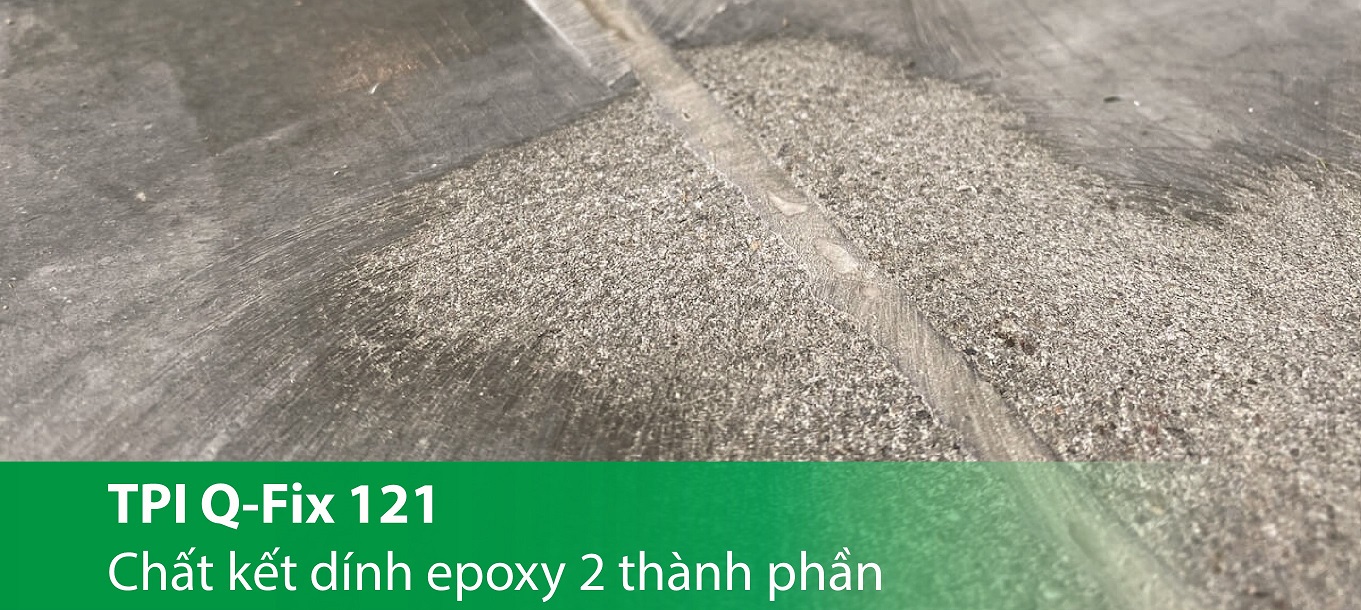
- Excellent adhesion to most building materials.
- High adhesion strength.
- High initial and terminal intensity.
- It does not sag when installed at height or on ceilings.
- It does not shrink when cured.
- Different color components (easy to control mixing quality).
- No connector required.
- Abrasion resistance.
- Good chemical resistance.
- It prevents water vapor and liquids from penetrating.
SPECIFICATIONS
| Target | TPI Q-Fix 121 |
| Ingredient | Epoxy resin |
| Color | Part A: Plastic – light yellow
Part B: Curing – Dark Gray Mixture: Concrete gray |
| Density | 1.70 ± 0.3 kg/liter |
| Pack | Set of 1kg / 6kg |
| Mixing ratio | 2:1 (by weight) |
| Compressive strength | ≥ 50 Mpa (3 days) |
| Tensile strength | ≥ 7 Mpa (3 days) |
| Adhesion strength | ≥ 3 Mpa |
| Standard | 1.7 kg/m²/1 mm thickness |
| Construction time | 30 minutes at 30oC |
| Expiry | 24 months (when unopened) |
| Storage | The packaging must be intact, unopened, and undamaged.
Store in a cool, dry, shaded place at a temperature of 5°C or higher.oC to 30oC. |
INSTRUCTIONS FOR USE
Surface preparation
- Mortar and concrete must be at least 28 days old (depending on the minimum required strength).
- Check the surface strength of the substrate (concrete, mortar, natural stone).
- The substrate surface must be clean, dry or damp (but not standing water) and free from contaminants such as dust, grease, existing coatings or surface treatments, etc.
- The steel surface must be derusted, thoroughly cleaned, and carefully prepared to achieve the desired quality, by using high-pressure air blowing or vacuum cleaning, taking care to avoid dew points.
- The substrate surface must be solid and all weak components and voids must be completely removed.
Mixing sequence
- Before application, components A and B must be thoroughly mixed in the correct ratio. Use a low-speed mixer (maximum 300 rpm) or other suitable mixing equipment.
- Mix for 2-5 minutes until the desired consistency and color are achieved.
- Avoid creating air bubbles when mixing for too long. Then, pour the entire mixture into a clean container and mix again for about 1 minute at low speed to remove as much air as possible.
- Only mix enough quantity to ensure optimal use during the product's construction period.
Construction
- When used as a thin adhesive layer, apply the adhesive to the prepared surface using a trowel, spatula, notched trowel (or by hand wearing protective gloves).
- When applying mortar for repairs, formwork is used.
- When bonding metal to vertical surfaces, the material must be secured by applying even pressure and holding for a minimum of 12 hours, depending on the thickness of the adhesive layer (not exceeding 5 mm) and ambient temperature. After curing, check the adhesion by gently tapping with a hammer.
Toilet
Clean all tools and equipment immediately after use. Cured material can only be cleaned by mechanical means.
HEALTH AND SAFETY INFORMATION
Occupational safety and health: Appropriate personal protective equipment, including safety glasses and gloves, should be worn when using this product. It may cause allergic reactions upon contact with eyes, skin, or mucous membranes. Ecology: Do not dispose of into water sources or soil.
Transport: Component A: not dangerous, Component B: dangerous.
Refer to the product's Material Safety Data Sheet (MSDS) and other relevant safety data sheets. Toxic: Component B may cause burns or serious eye damage.




Reviews
There are no reviews yet.