

 TECHNICAL DOCUMENTATION
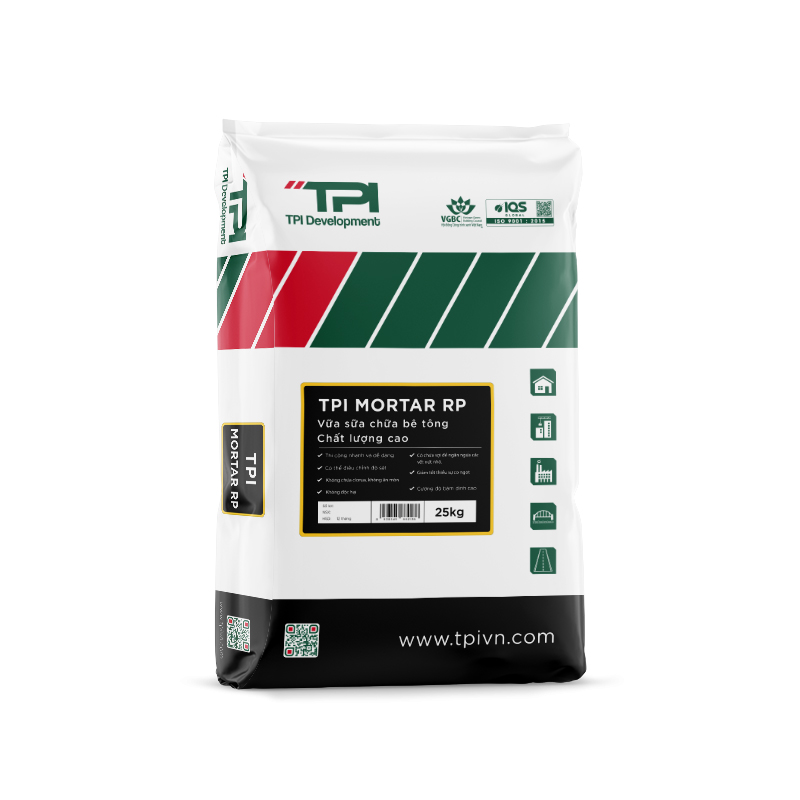
TPI Mortar RP
High-quality concrete repair mortar with fiber reinforcement.
DESCRIBE
TPI Mortar RP It is a one-component, fiber-reinforced, polymer-modified cement mortar containing silica fume.
APPLICATIONS OF TPI MORTAR RP FIBER MORTAR
TPI Mortar RP Used for the following applications:
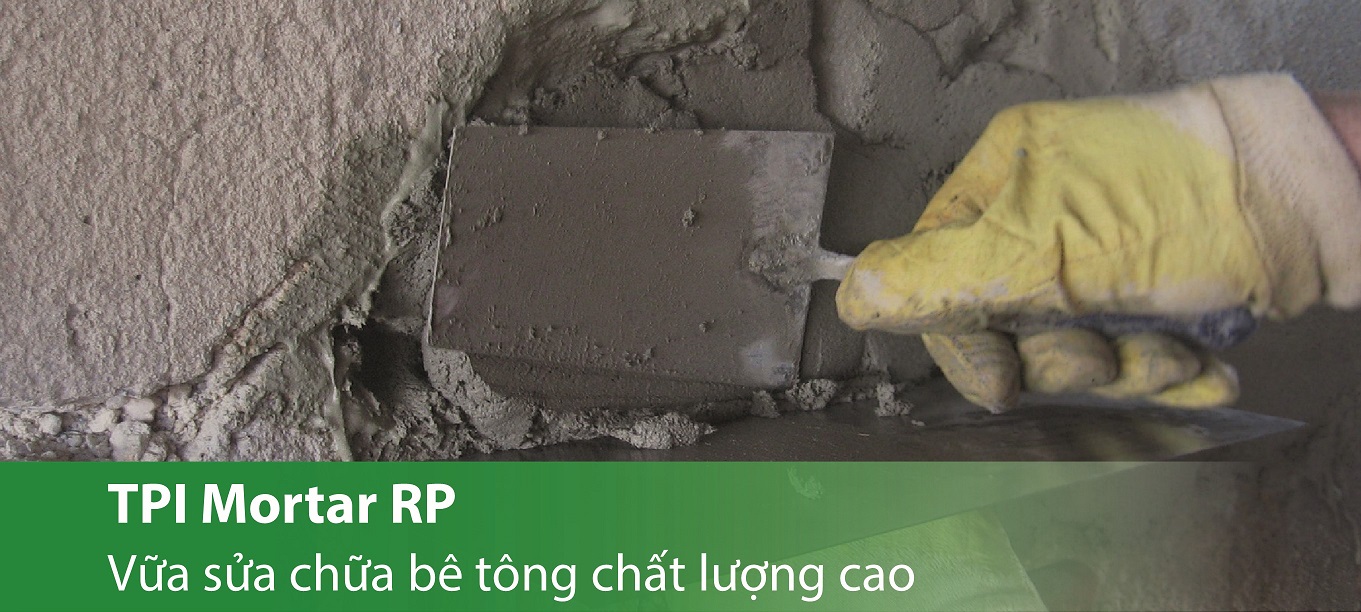
- Quick repair for vertical and horizontal concrete or mortar surfaces above or below ground.
- Repair and fill voids, pitted surfaces, defects, etc.
- Repairing concrete that has chipped due to corroded reinforcing steel.
- Repairing helps increase resistance to oil, grease, chemicals, waste materials, etc.
ADVANTAGE TPI MORTAR RP Repair Mortar
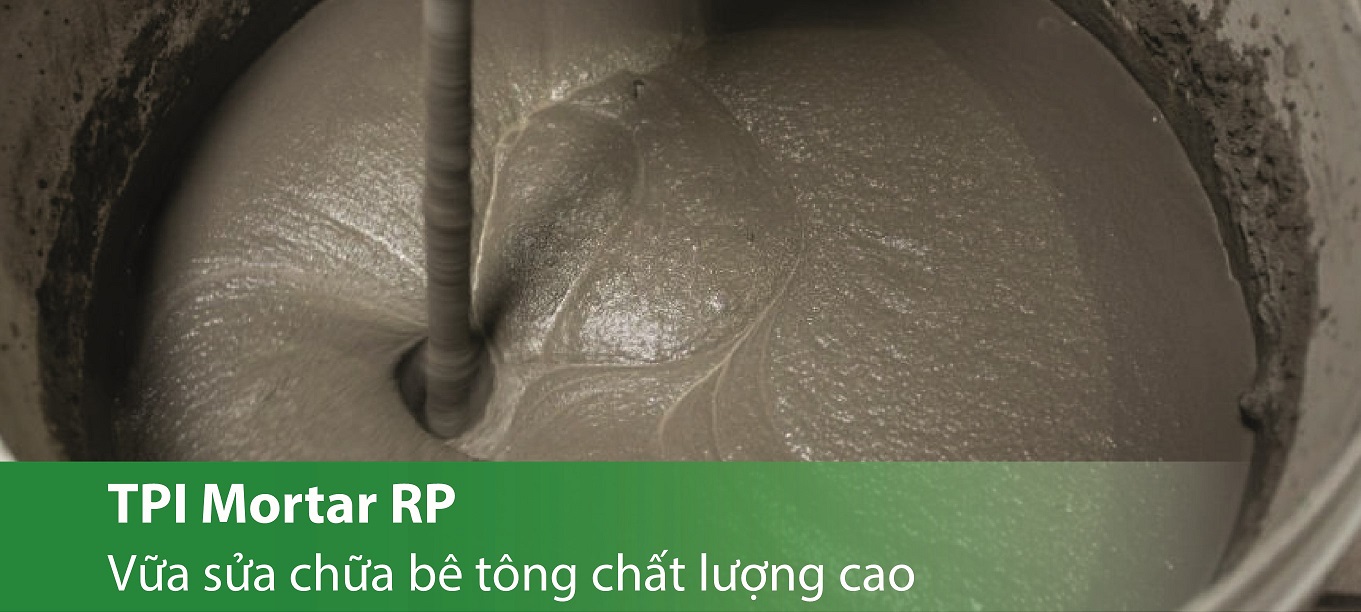
- Easy to use, just mix with clean water.
- Fast and efficient construction, high economic returns.
- The consistency can be adjusted, and it can be applied using a wet spray method.
- The thermal expansion properties are compatible with those of concrete.
- No chlorides, no corrosive agents.
- Non-toxic.
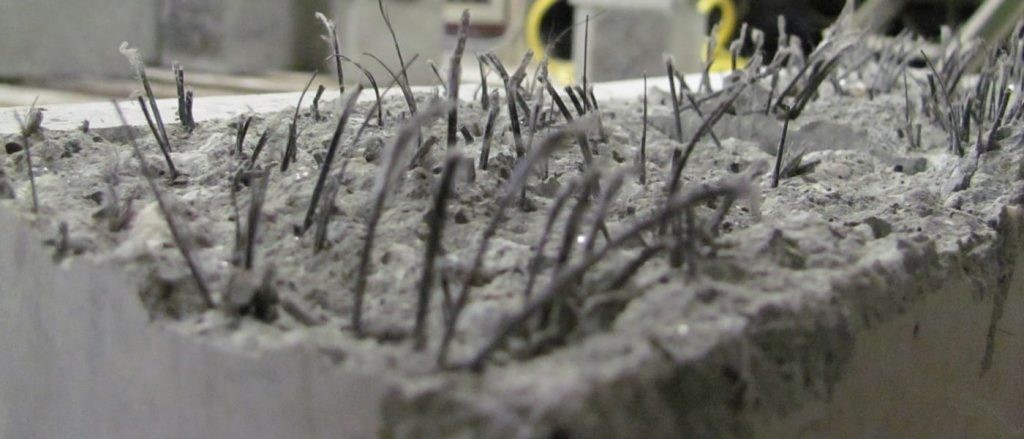
- Reinforcing fibers help prevent small cracks.
- Minimize shrinkage.
- High adhesion strength.
- Significantly reduces water and carbon dioxide permeability.,
- Enhanced resistance to oil and chemicals.
- Good sulfate resistance. Contains corrosion inhibitors.
TPI MORTAR RP SPECIFICATIONS
| Target | TPI Mortar RP |
| Ingredient | Cement and additives |
| Shape/Color | Cement gray powder |
| Density | Bulk density of the powder: ~1.45 kg/liter
The bulk density of freshly mixed mortar: ~2.15 kg/liter |
| Compressive strength
(ASTM C349) |
≥ 15Mpa (1 day)
≥ 45Mpa (28 days) |
| Flexural tensile strength
(ASTM C348) |
~ 8 MPa (28 days) |
| Adhesion strength
(ASTM D4541) |
~1.5 MPa (28 days) |
| Water mixing ratio | 16 – 18% (by weight)
Use approximately 4.0 – 4.5 liters of clean water. 1 bag of flour (25 kg) |
| Output | 25 kg bag of powder ~ 13.3 liters of mortar
75 bags of 25 kg each ~ 1 m³ of mortar |
| Construction temperature | 5 – 40oC |
| Construction time | ~30 minutes (at +27°C/relative humidity 65%) |
| Layer thickness | Minimum: 5 mm
Maximum: 30 mm |
| Specifications | 25 kg bag |
| Expiry | 12 months (when unopened) |
| Storage | A cool, dry, shady place. |
INSTRUCTIONS FOR USE
Surface preparation
- All concrete and mortar substrates must be clean, solid, and free of oil, grease, and other contaminants. Loose debris and dust must be removed from the surface.
- For large areas, sandblasting or high-pressure water jetting should be used. For smaller areas or localized repairs, blasting guns or drills can be used.
- Concrete or mortar surfaces must have a minimum compressive strength of 20 MPa.
- The treated surface must be thoroughly moistened with clean water until it is completely saturated, but without standing water. This state is also known as dry saturation of the surface, and any remaining cement paste or dust from the surface treatment process must be carefully removed.
- The reinforcing steel must be completely free of rust and primed with two coats. TPI Mortar SP.
Connection layer
- Concrete: Before construction begins TPI Mortar RP, must be used TPI Mortar SP Apply the bonding layer. Always apply the bonding layer while it is still wet.
- Reinforcement steel: Apply two coats TPI Mortar SP on top of the prepared reinforcing steel surface.
Mix the products
- The powder is added gradually to the pre-measured container of water until the desired consistency is achieved.
- When using an electric mixer, mix at a low speed (maximum 500 rpm) for at least 3 minutes.
Product manufacturing
- Apply the bonding layer to the surface while it is still saturated and dry. Then, while the bonding layer is still wet, apply the thoroughly mixed mortar to the surface, using a troweling technique to fill voids instead of pouring directly onto the surface. The mortar must be compacted. Compact the mortar from the edges of the repair area and work your way towards the center.
- If the repair depth exceeds 20 mm, it is necessary to apply the mortar in layers, ensuring that the previous mortar layer has sufficient roughness and is fully cured. The underlying layers can be roughened with a stiff brush to improve adhesion with the subsequent layers.
- If the previous mortar layer is more than 48 hours old, roughen the surface with a spray gun and moisten it. The final coat can be finished with a steel trowel if needed.
Maintenance
To achieve optimal performance, proper curing of cement-based materials is crucial. In warm or windy weather, basic curing measures (covering with tarpaulins or damp burlap) should be implemented to prevent the mortar from drying out too quickly.
Toilet
Rinse tools thoroughly with water immediately after use. Hardened mortar can only be removed by mechanical means.
Important note
- TPI Mortar RP It is not possible to seal developing cracks or expansion joints.
- Multiple layers should be applied if the repair depth exceeds 20 mm.
- TPI Mortar RP Wetting the mortar during the initial curing stage may create white, powdery spots on the surface, but this does not affect its long-term properties.
HEALTH AND SAFETY INFORMATION
Occupational safety and health: Appropriate personal protective equipment, including safety glasses and gloves, should be worn when using this product. It may cause allergic reactions upon contact with eyes, skin, or mucous membranes.
Ecology: According to local regulations.
Transport: Not dangerous.
Refer to the Product Safety Data Sheet (MSDS) before use.




Reviews
There are no reviews yet.